FAU-USP thesis and MBA · 2021–2024
CoIN
Finalist
Campus Mobile 2023, and published in the FAU USP library
A financial education app for 11-to-14-year-olds, built around the adult
The problem
Two stages, and it is worth separating them: the thesis at FAU-USP in 2021, which produced the research and the prototype, and the MBA that followed, finished in January 2024, where a scope cut turned it into an MVP small enough to build. Financial education apps for teenagers tend to assume the teenager learns alone. The research says the opposite. Cássia D'Aquino, the financial educator interviewed for the project, put it plainly: no game in the world has ever educated anyone for anything, and what matters is that parents understand the game as a vehicle and not as a pedagogical solution. Interviews with families showed the other half of the problem: money changes hands between parent and child, and none of it leaves a record either side can look back at. So the design problem was never how to teach a kid about money on a screen. It was how to create the thread of conversation between the kid and the adult who is already handing over the money.
What I ruled out
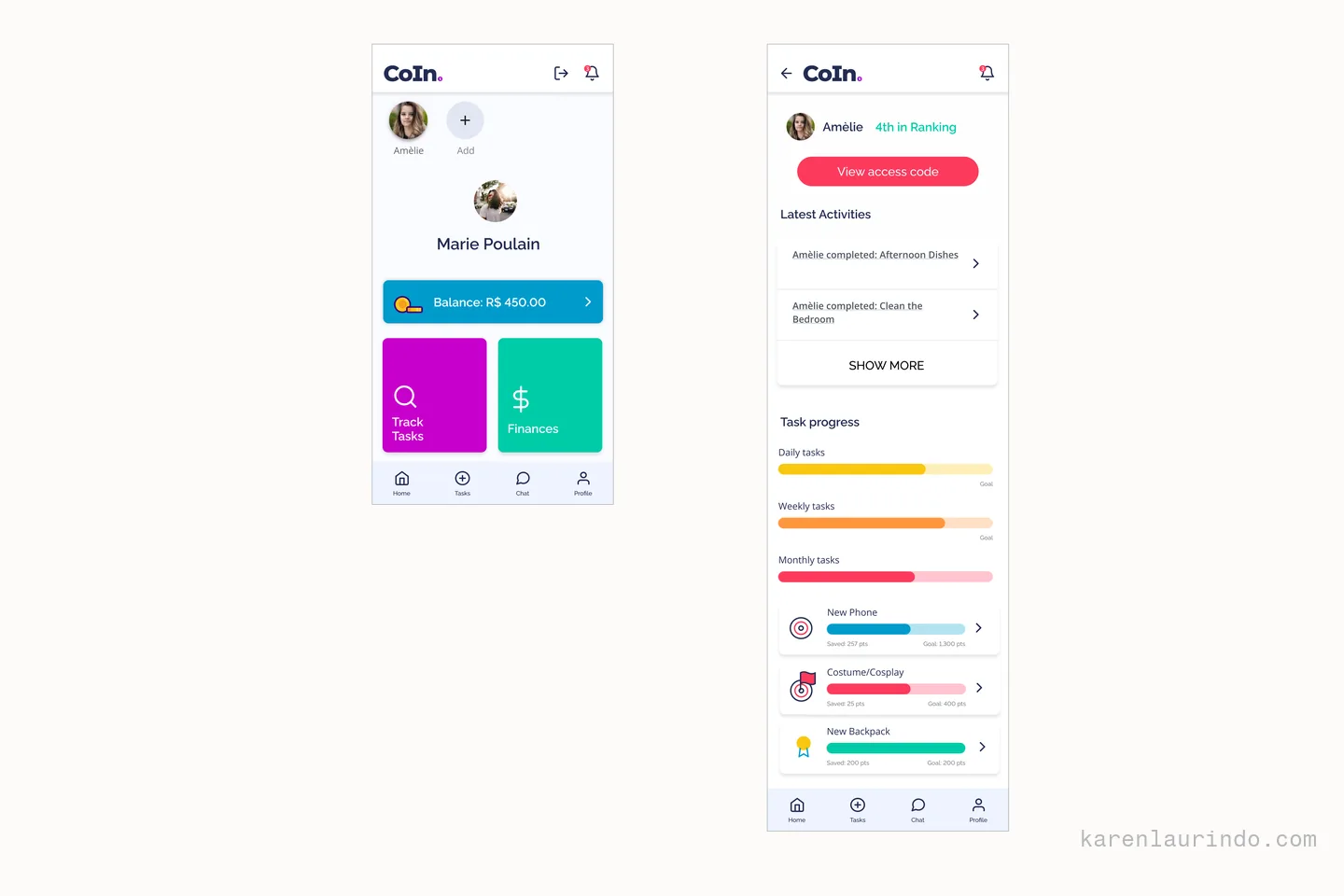
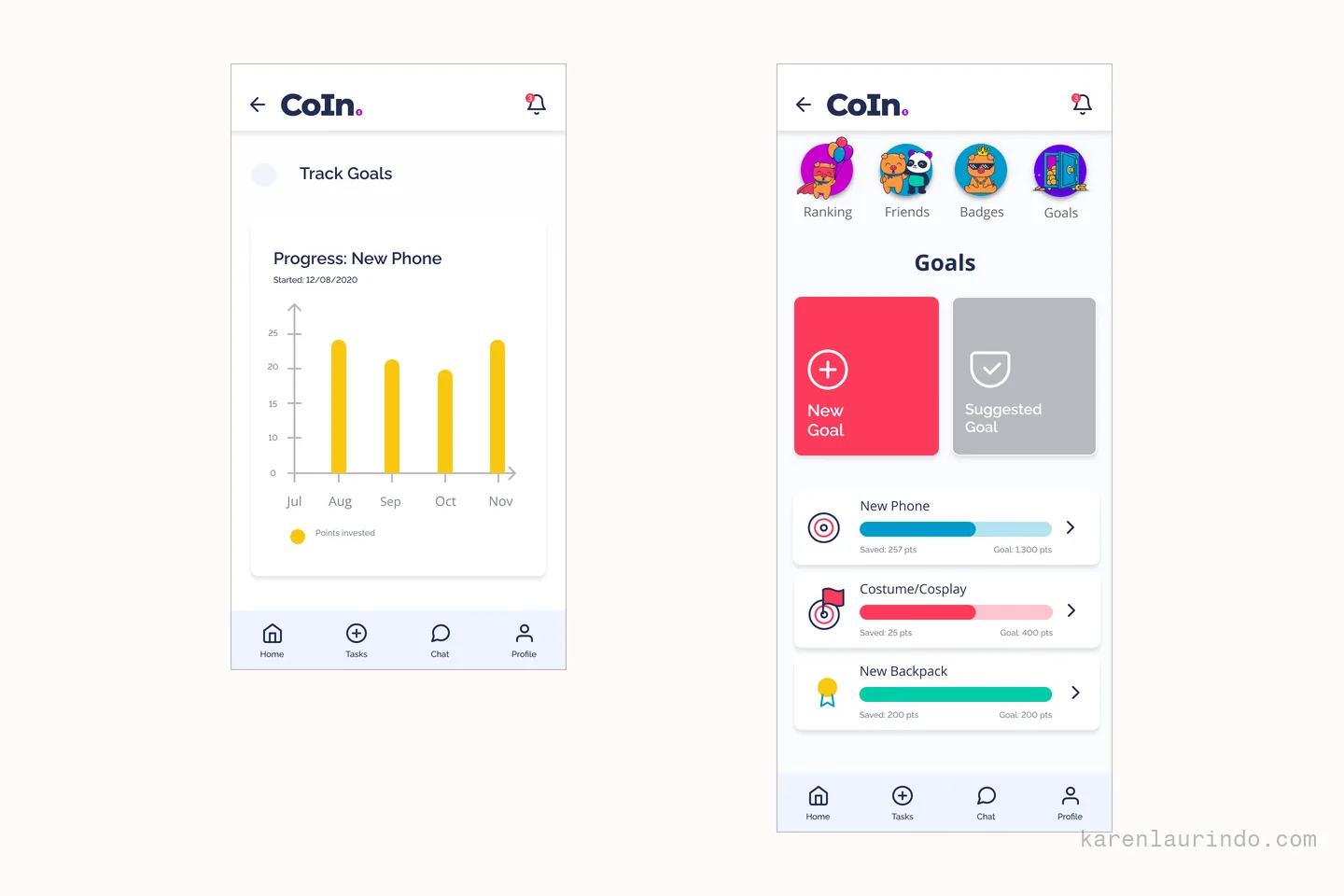
Solo learning was the first thing discarded. It is the exact criticism the research itself makes of an existing app it examined, and rebuilding that model would have repeated the failure. The rest was discarded later, in the MVP cut. Real money went first: Pix and a custodial account require being a payment institution and meeting BACEN compliance, so the app registers and calculates while the money moves outside it. That has an honest consequence I chose to keep: a savings goal does not hold money back. The amount stays in the balance and can be spent, because an app that does not custody money must not pretend to block it. What it does instead is show the conflict: you have R$ 40, but R$ 30 are promised to the new phone. The Educator profile went too, cutting the thesis's three profiles down to two: it needs a B2B structure the thesis never resolved.
The decision
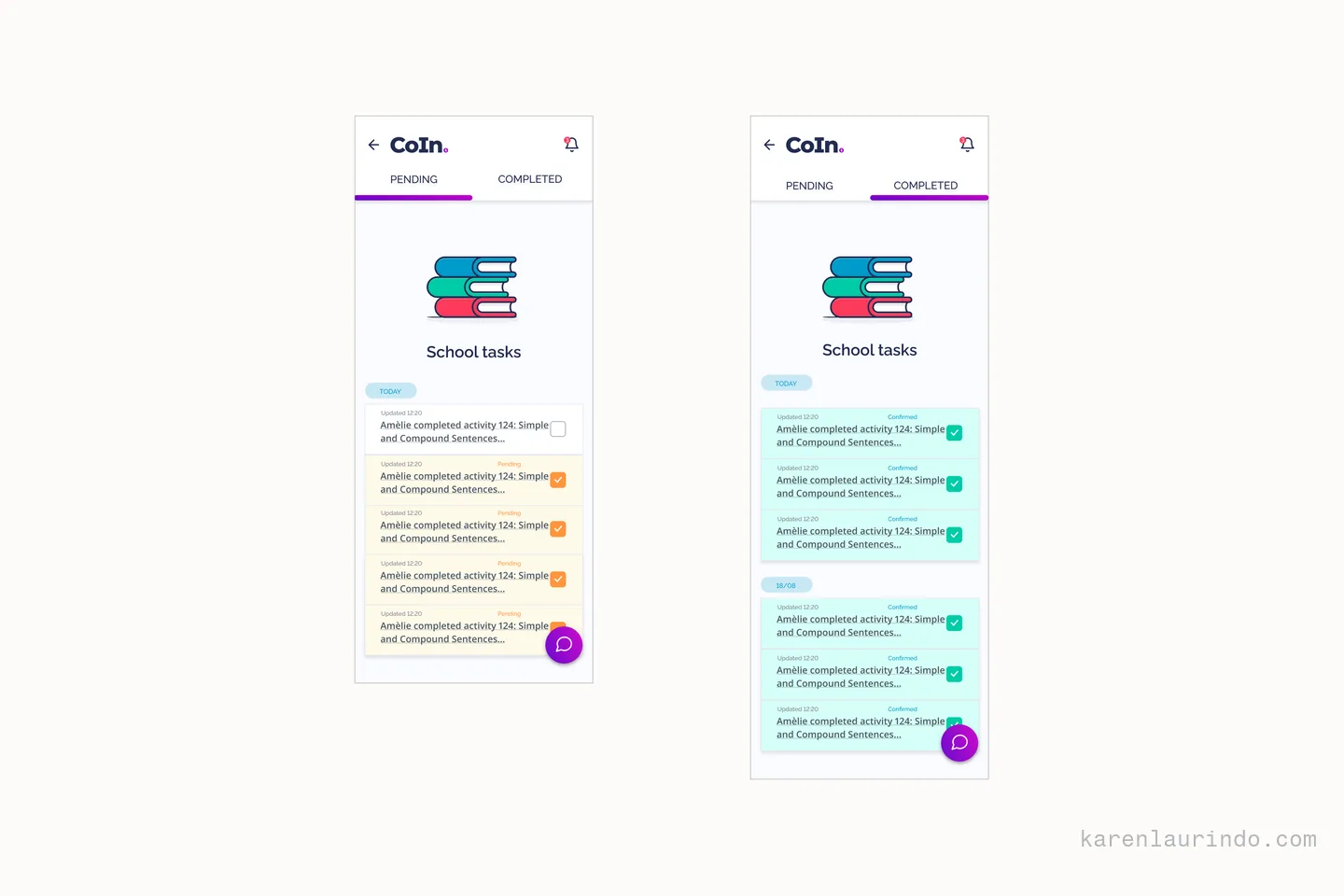
The allowance is unconditional. It does not depend on grades, behaviour, or chores. It always arrives, and the lesson is making it last; chores earn an extra on top. This deliberately contradicts what the interviewed parents asked for (several said that with bad grades there should be no allowance) and follows the psychologist interviewed for the research and Cerbasi: the allowance is a budgeting instrument, not a reward. Around that rule sit the two moments where both people act in sequence, and those are where the conversation happens. Payment: the adult marks paid, the young user confirms received, and while it is unconfirmed it stays pending and visible to both, with no automatic deadline, because that is settled by talking. Chore: the young user marks it done, the adult approves or sends it back with a comment.
The result
The project was never launched, so there is no measured outcome and I will not invent one. What the research produced is the substance: a survey answered by 58 parents over one month, interviews with four families about how allowance actually works at home, interviews with two specialists (a child psychologist and the financial educator Cássia D'Aquino), and six usability and perception sessions on the prototype, three with adults and three with children aged 11, 12 and 14, run remotely over Figma and Google Meet with families recruited from the earlier interviews. The tests changed the design directly: no text below 11px, because the adults could not read the smaller style; the profile photo became tappable to edit, because that is what people tried to do; the primary button moved above the fold, or gained an indication of content below, because people did not scroll the sign-up screen. The output was a high-fidelity Figma prototype of around 130 screens across three profiles.
What I'd do differently
I would test the way a young user gets in before designing anything behind it. The invitation goes by email, and plenty of 11-to-14-year-olds have no email of their own. The whole product is unreachable for them until an adult solves a problem the product created. Copying the invite link reduces the friction but does not remove it, and a short code is already mapped as the alternative I should have started from. The same instinct applies to the model itself: without a registered adult the app does nothing, and I accepted that cost on the strength of the research rather than putting it in front of families early and watching where it broke.